
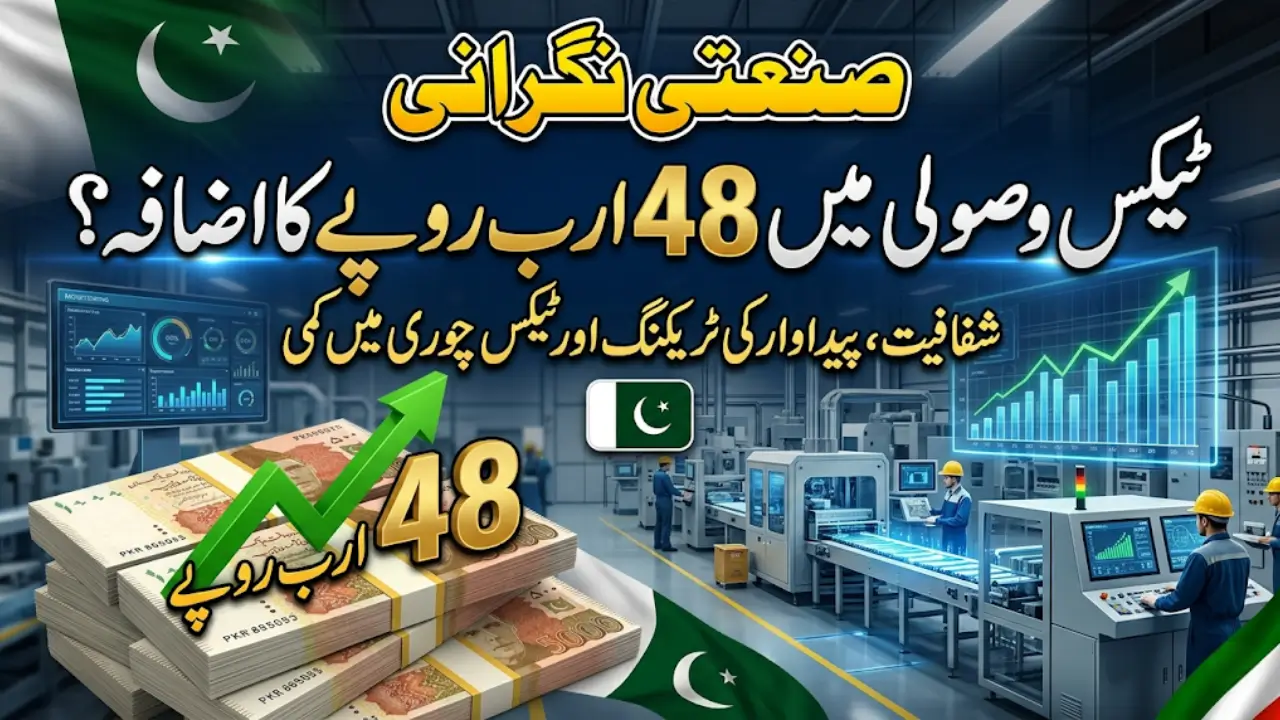
Industrial Monitoring may help Pakistan add Rs. 48 billion to tax collection by improving transparency, reducing leakage, and tracking production.According to the idea behind this initiative, better tracking of industrial production, sales, and supply chains can help the government reduce tax leakage and increase revenue.
The expected addition of Rs. 48 billion to tax collection shows how important proper monitoring can be for the economy. When industries are monitored in a transparent and organized way, it becomes easier to identify underreporting, fake records, and gaps in tax payments.
صنعتی نگرانی کا مقصد کاروبار پر غیر ضروری دباؤ ڈالنا نہیں بلکہ پیداوار، فروخت اور ریکارڈ کو زیادہ شفاف بنانا ہے۔ جب صنعتوں کا ڈیٹا درست طریقے سے محفوظ ہوگا تو حکومت کو ٹیکس وصولی میں بہتری مل سکتی ہے اور ایسے کاروباروں کی حوصلہ شکنی ہوگی جو اپنی اصل آمدنی یا پیداوار چھپاتے ہیں۔
This move can also support honest businesses. Companies that already pay their taxes properly often face unfair competition from those that hide income or avoid documentation. A strong monitoring system can create a more balanced business environment.
You Can Also Read : BISP 14500 Withdrawal & Verification Process
Why Industrial Monitoring Matters for Tax Collection
Industrial monitoring means keeping a clear record of production, movement, and sales of goods in different sectors. It may include digital tracking systems, production data, sales records, and official verification methods.
Many industries produce large quantities of goods, but not all production is always fully reported. This creates a gap between actual economic activity and tax revenue received by the government.
By improving monitoring, authorities can compare production levels with declared sales and taxes. If there is a major difference, it becomes easier to investigate and correct the problem.
How Rs 48 Billion May Be Added to Revenue
The possible addition of Rs. 48 billion may come from reducing tax evasion and improving compliance. When industrial data becomes more accurate, businesses are more likely to report their real production and sales.
This does not always mean adding new taxes. In many cases, the main goal is to collect the tax that is already due under existing rules.A better system can help tax departments identify sectors where revenue is being lost. It can also reduce manual errors and make tax collection more efficient.
You Can Also Read : Pakistan Plans 500000 Cars Yearly With $1 Billion Exports
Key Benefits of Industrial Monitoring
Industrial monitoring can bring several benefits for the tax system and the wider economy. In the middle of this process, the most important gains may include:
- Better tracking of production and sales records
- Reduced tax leakage through improved documentation
- Fair competition between compliant and non-compliant businesses
These benefits can help build trust between businesses and the government. When rules are applied fairly, more industries may be willing to become part of the documented economy.
یہ نظام اسی وقت کامیاب ہو سکتا ہے جب اسے آسان، شفاف اور کاروبار دوست انداز میں نافذ کیا جائے۔ حکومت کو چاہیے کہ چھوٹے اور درمیانے درجے کے کاروباروں کو واضح رہنمائی دے تاکہ وہ درست ریکارڈ رکھ سکیں اور قانونی تقاضے پورے کر سکیں۔
Impact on Industries and Businesses
For industries, monitoring may bring both responsibility and opportunity. Businesses may need to maintain cleaner records, update their reporting systems, and ensure their production data matches their tax filings.
At first, some companies may see this as an extra burden. However, in the long run, proper documentation can help businesses grow. Banks, investors, and government departments usually trust companies with transparent records.
Small and medium industries may also benefit if the system is introduced in a simple and practical way. The government should make sure that compliance is not too complicated for smaller businesses.
Role of Technology in Industrial Monitoring
Technology can play a major role in making industrial monitoring successful. Digital tools can reduce paperwork, speed up reporting, and make data more reliable.For example, automated production records and digital sales tracking can help authorities understand how much a factory produces and sells. This can reduce the chances of false reporting.
A modern monitoring system should also protect business data. Industries need confidence that their information will be used only for legal and tax-related purposes.
Challenges in Implementing the System
Although industrial monitoring has strong potential, implementation may not be easy. Some businesses may resist the system because they are not used to digital reporting or fear extra scrutiny.
There may also be technical challenges, especially in areas where industries still use old systems. Training, awareness, and clear guidelines will be important.
The government should avoid creating unnecessary pressure on genuine taxpayers. The aim should be to improve transparency, not to disturb regular business activity.
You Can Also Read : Punjab Payment Update Token Tax and EPA
Why This Step Is Important for Pakistan’s Economy
Improving tax collection is important for economic stability. Higher revenue can help the government spend more on public services, infrastructure, education, health, and development projects.
Pakistan needs a stronger tax base to reduce pressure on borrowing and improve financial management. Industrial monitoring can support this goal by bringing more economic activity into the formal system.
If implemented fairly, the expected Rs. 48 billion increase in tax collection can become a positive step toward a more transparent and responsible economy.
Conclusion
Industrial monitoring may add Rs. 48 billion to tax collection by reducing tax gaps, improving documentation, and encouraging honest reporting. It can help the government collect due revenue without simply increasing tax rates.
For this system to succeed, it should be transparent, business-friendly, and supported by technology. Proper guidance for industries will also be necessary.A fair monitoring system can benefit both the economy and compliant businesses. It can make tax collection stronger, reduce unfair competition, and support Pakistan’s move toward better financial discipline.
FAQs
What is industrial monitoring?
Industrial monitoring is the process of tracking production, sales, and records of industries to improve transparency and compliance.
How can it increase tax collection?
It can reduce underreporting and tax leakage by matching industrial production data with declared sales and taxes.
Will this add new taxes on industries?
Not necessarily. The main goal is usually to collect existing taxes more accurately.
Why is Rs. 48 billion important?
Rs. 48 billion is a significant amount that can support public services, development, and economic stability.
How can businesses prepare for monitoring?
Businesses can maintain proper records, use digital systems, and ensure their tax filings match actual production and sales.