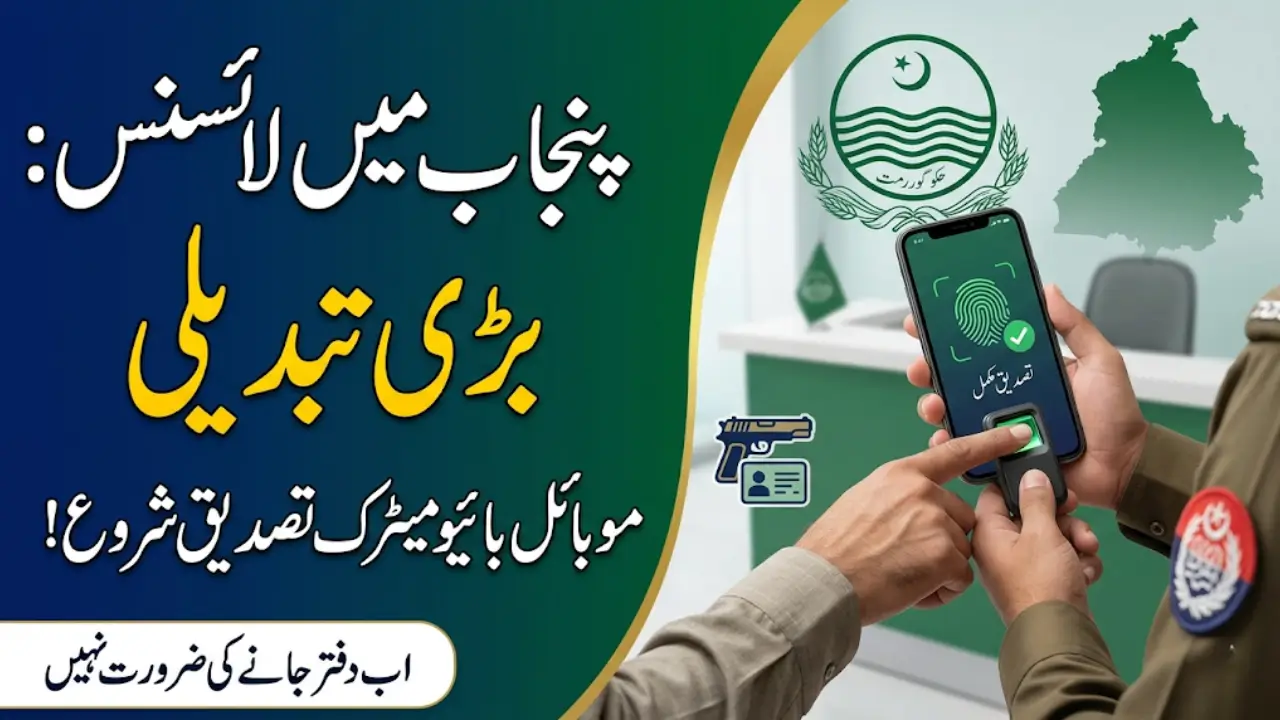
Punjab has recently introduced a new Mobile Biometric Verification system for arms licences, aiming to make the entire process faster, safer, and more transparent. This step is part of a broader effort to modernize public services and reduce delays that citizens often face in government offices. The idea is simple: instead of long manual checks and repeated visits, verification can now be done through mobile-based biometric systems.
For many people, getting or renewing an arms licence has always involved paperwork, identity checks, and waiting time. With this new system, the government wants to simplify things while also improving security. It reflects a shift toward digital governance where technology is used to solve everyday administrative problems in a more efficient way.
پنجاب میں اسلحہ لائسنس کے لیے موبائل بایومیٹرک تصدیق کا نیا نظام متعارف کرایا گیا ہے جس کا مقصد عوام کو آسان اور تیز سہولت فراہم کرنا ہے۔ اس نظام کے ذریعے اب شہریوں کو بار بار دفاتر کے چکر نہیں لگانے پڑیں گے بلکہ تصدیق کا عمل جدید طریقے سے مکمل کیا جائے گا۔ حکومت کا کہنا ہے کہ اس اقدام سے نہ صرف وقت کی بچت ہوگی بلکہ ریکارڈ کا نظام بھی زیادہ محفوظ اور شفاف ہو جائے گا۔
What Mobile Biometric Verification Really Means
Mobile biometric verification is a digital identity checking method that uses fingerprints or other biometric data to confirm a person’s identity. In this system, verification can be done through mobile devices or portable machines instead of only fixed office setups.
This means officials can verify applicants on the spot, and the data is instantly matched with official identity records. It reduces manual effort and helps ensure that the person applying for a licence is genuinely who they claim to be.
You Can Also Read : Saudi Arabia Provides $2 Billion Support
Why Punjab Needed This New System
The traditional arms licence process in Punjab often involved delays and repeated office visits. People from far areas had to travel long distances just for verification, which created frustration and extra cost.
Another issue was the risk of errors or misuse in manual record handling. With increasing population and demand for services, the old system was becoming harder to manage efficiently. The mobile biometric system was introduced to solve these problems in a practical way.
یہ نیا طریقہ کار خاص طور پر ان لوگوں کے لیے فائدہ مند ہے جو دور دراز علاقوں میں رہتے ہیں اور سرکاری دفاتر تک پہنچنے میں مشکلات کا سامنا کرتے ہیں۔ اب تصدیق کا عمل موبائل نظام کے ذریعے موقع پر ہی مکمل کیا جا سکے گا جس سے جعلی شناخت یا غلط اندراج کے امکانات کم ہو جائیں گے۔ اس اقدام سے سرکاری نظام میں بہتری آئے گی اور شہریوں کو زیادہ آسان اور قابل اعتماد سہولت فراہم ہو گی۔
How the New Verification Process Works
The process is designed to be simple and user-friendly. A person applying for an arms licence goes through biometric verification using a mobile device operated by authorized staff.
Once fingerprints are captured, they are matched with national identity records. If the data matches, the application moves forward in the system for approval. This reduces the need for multiple physical visits and speeds up the entire procedure.
Key Benefits for Citizens
The new system brings several clear advantages for the public. It saves time, reduces travel, and makes the process more transparent. Most importantly, it helps ensure that identity verification is accurate and secure.
- Faster verification and shorter processing time
- Less travel and fewer visits to government offices
- Improved accuracy in identity checking and record keeping
These benefits make the process more convenient, especially for people living in rural or distant areas.
You Can Also Read : PTA Tax Reduction on Mobile Phones
Improving Security and Reducing Misuse
One of the main goals of this system is to improve security. Arms licences require strict identity checks, and any weakness in verification can lead to misuse or fake documentation.
With biometric verification, each applicant must physically confirm their identity through fingerprints. This makes it much harder for fake or unauthorized applications to pass through the system. It also creates a more reliable record that can be tracked and reviewed when needed.
Making Services Easier for Remote Areas
In many parts of Punjab, people live far away from major government offices. Traveling for verification can take hours or even a full day. The mobile system helps solve this issue by bringing the service closer to the people.
Instead of citizens going to the office, the verification process can now reach them through mobile units. This not only saves time but also makes government services more accessible for everyone.
A Step Toward Digital Governance in Punjab
This initiative is part of a larger shift toward digital systems in public administration. The goal is to reduce paperwork, improve efficiency, and make services more citizen-friendly.
In the future, similar mobile verification systems may be used in other departments as well. This could include licensing, registrations, and identity-based services. Punjab’s move shows how technology can improve governance when used in a practical and focused way.
Conclusion
The introduction of mobile biometric verification for arms licences in Punjab is a positive step toward modernization and better service delivery. It simplifies a process that was once slow and complicated, while also strengthening security and reducing the chances of misuse.
By bringing verification closer to citizens and using digital tools, the system makes government services more efficient and accessible. Over time, this approach can help build a more transparent and reliable administrative system for everyone.