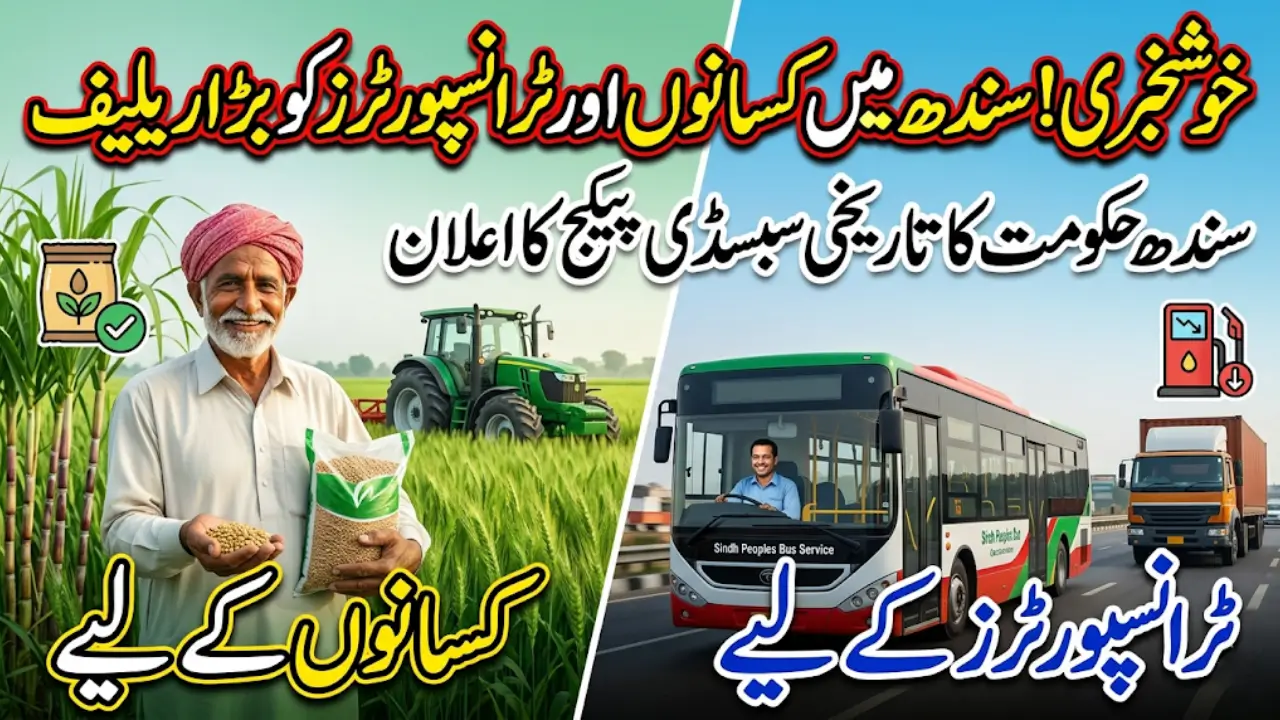
The Sindh Government has introduced a new subsidy package aimed at supporting transporters and farmers who are facing rising economic pressure. This move is designed to reduce operational costs, improve productivity, and provide relief in sectors that directly impact daily life and food supply. With inflation and fuel prices continuing to affect household budgets, such measures are being seen as an effort to stabilize essential services.
The announcement highlights the government’s focus on strengthening both the agriculture and transport sectors. These two areas are closely connected to the overall economy, as farmers depend on transport for supply chains and transporters rely on agricultural demand for business. The package is expected to ease financial stress and encourage smoother economic activity across rural and urban regions.
سندھ حکومت نے ٹرانسپورٹ کے شعبے سے وابستہ افراد اور کاشتکاروں کے لیے ایک بڑا رعایتی پیکیج جاری کیا ہے جس کا مقصد بڑھتی ہوئی مہنگائی اور اخراجات کے دباؤ کو کم کرنا ہے۔ اس اقدام کے تحت ضروری سہولیات کی لاگت میں کمی لانے اور روزمرہ کے کاموں کو آسان بنانے کی کوشش کی گئی ہے تاکہ دونوں اہم شعبے بہتر طریقے سے اپنی سرگرمیاں جاری رکھ سکیں۔ حکومت کا کہنا ہے کہ یہ فیصلہ معیشت کو مستحکم کرنے اور عوام کو ریلیف فراہم کرنے کے لیے کیا گیا ہے۔
Sindh Subsidy Package 2026 Overview
The subsidy package is structured as a broad relief initiative covering multiple cost areas for transporters and farmers. It focuses on reducing expenses related to fuel, agricultural inputs, and logistics operations. The main goal is to create balance in sectors that are currently under pressure due to rising costs.
This initiative reflects a policy direction aimed at economic stabilization and targeted support. Instead of general relief, the plan focuses on specific industries that have a direct impact on food supply and mobility. By doing so, the government aims to ensure that support reaches the most affected groups.
You Can Also Read : Sindh to Receive Advanced Firefighting Equipment
Relief Measures for Transport Industry
Transporters are among the most affected groups due to high fuel prices and maintenance costs. The subsidy package aims to provide structured financial relief that can help reduce these operational challenges. This is expected to benefit both private transport owners and public service operators.
The reduction in costs may also help stabilize fares for passengers and goods transportation. As transport expenses decrease, supply chains could become more efficient, allowing faster movement of goods across the province. This can positively impact both businesses and consumers.
اس پیکیج سے خاص طور پر زرعی شعبے میں پیداوار بڑھنے اور ٹرانسپورٹ کے نظام میں بہتری آنے کی توقع کی جا رہی ہے۔ کاشتکاروں کو زرعی اخراجات میں کمی جبکہ ٹرانسپورٹ سے وابستہ افراد کو آپریشنل اخراجات میں ریلیف ملنے سے مجموعی طور پر اشیاء کی ترسیل اور قیمتوں میں استحکام پیدا ہو سکتا ہے۔ عوامی سطح پر اس اقدام کو ایک مثبت قدم کے طور پر دیکھا جا رہا ہے جو آنے والے وقت میں معاشی حالات بہتر بنانے میں مددگار ثابت ہو سکتا ہے۔
Support for Farmers and Agricultural Growth
Farmers play a vital role in ensuring food security, and rising input costs have made farming increasingly difficult. The subsidy package aims to support them by lowering the cost of seeds, fertilizers, and irrigation-related expenses. This support is especially important for small-scale farmers who have limited financial capacity.
With reduced production costs, farmers may be able to increase crop output and improve income stability. The initiative also encourages better use of agricultural resources, which can contribute to long-term sustainability in rural areas. Improved farming conditions can help strengthen the overall economy.
Fuel Subsidy and Operational Cost Reduction
One of the key elements of the subsidy package is fuel-related relief, which directly affects both transporters and farmers. Fuel expenses are often the largest share of operational costs, so even small reductions can have a significant impact.
- Discounted fuel support for registered transport operators
- Subsidized diesel access for agricultural machinery
- Partial reimbursement options for high-usage users
These measures are expected to reduce daily financial pressure and improve productivity. Lower fuel costs can also help control inflation by reducing transportation and production expenses.
You Can Also Read : Tourism Department Withdraws Fare Hike
Registration and Eligibility Requirements
To ensure fairness, the subsidy package includes a registration system for eligible individuals and businesses. Transporters and farmers will need to provide proper documentation to qualify for benefits. This helps ensure that only genuine applicants receive support.
The registration process is expected to be simple and accessible, with both offline centers and digital options available. Authorities are also planning verification steps to prevent misuse and ensure transparency. This approach is intended to build trust in the distribution system.
Expected Economic Impact
Economically, the subsidy package may help reduce short-term financial pressure on key sectors. Lower transportation and production costs can lead to more stable market prices for essential goods. This can benefit consumers by making daily necessities more affordable.
At the same time, experts believe that long-term success will depend on how effectively the program is managed. Proper monitoring and timely adjustments will be necessary to ensure that benefits reach the intended groups. If implemented well, the initiative could contribute to overall economic stability.
Public Response and Future Outlook
The public response to the subsidy announcement has been generally positive, especially among transport workers and farming communities. Many see it as a practical step toward addressing real economic challenges. It also reflects a growing demand for targeted relief programs in essential sectors.
Looking ahead, there is potential for expanding similar initiatives if this package proves successful. Future policies may focus on digital tracking, improved transparency, and broader inclusion of other struggling industries. The long-term impact will depend on continuous evaluation and policy refinement.
Conclusion
The Sindh Government’s subsidy package for transporters and farmers represents a focused effort to address rising economic pressures in key sectors. By targeting fuel costs, agricultural inputs, and operational expenses, the initiative aims to provide meaningful relief to those most affected by inflation.
If implemented effectively, this package could help stabilize prices, improve productivity, and strengthen both rural and urban economies. It highlights the importance of targeted economic support in maintaining balance during challenging financial times.