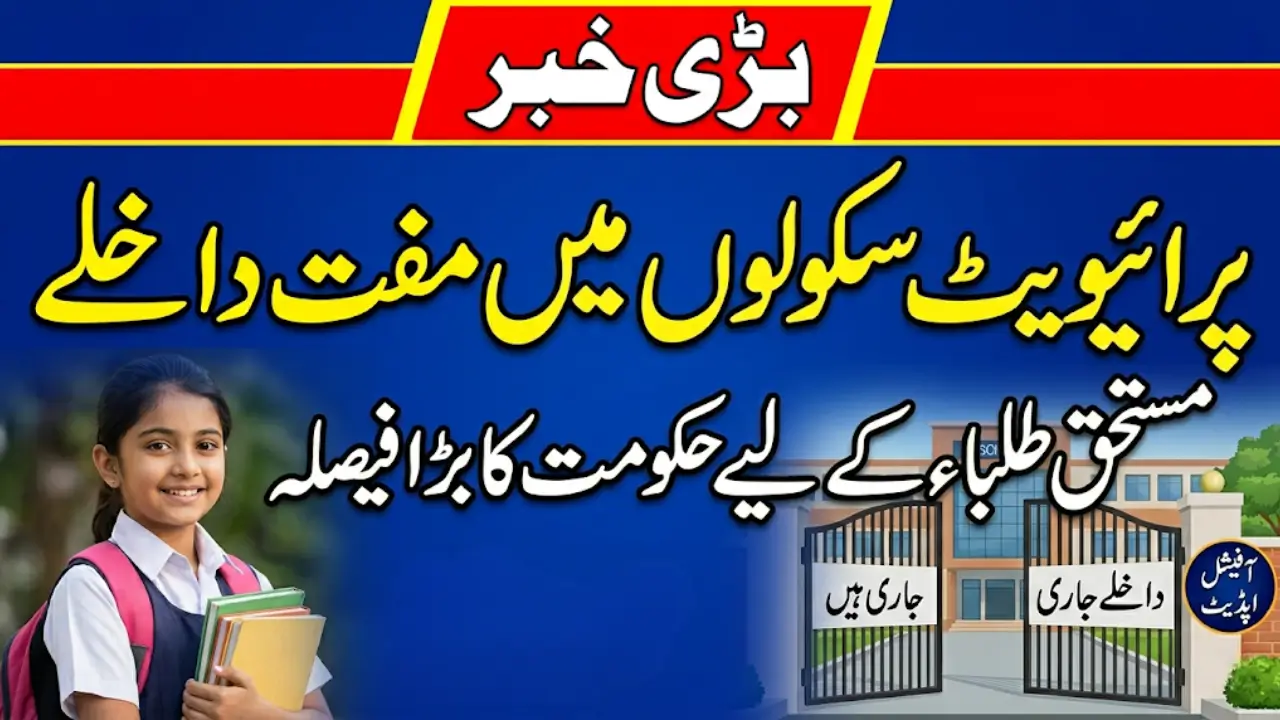
The decision to direct Private Schools to reserve free seats for needy students is becoming an important step toward building a fairer education system. In many regions, private education has become too expensive for low-income families, leaving a large number of children unable to access quality schooling. This new approach aims to reduce that gap by ensuring that private institutions also contribute to social inclusion.
Education plays a key role in shaping a child’s future, but financial limitations often decide who gets access to better schools. By introducing free or reserved seats, policymakers are trying to ensure that talented and deserving students are not left behind simply because of their economic background. This shift reflects a growing focus on equal opportunity in education systems.
پرائیویٹ اسکولوں کو ہدایت دی گئی ہے کہ وہ مستحق اور کم آمدنی والے طلبہ کے لیے مفت نشستیں مختص کریں تاکہ تعلیم سب کے لیے برابر مواقع پر دستیاب ہو سکے۔ آج کے دور میں معیاری تعلیم کی بڑھتی ہوئی لاگت نے بہت سے خاندانوں کے لیے مشکلات پیدا کر دی ہیں، جس کی وجہ سے کئی بچے اچھے تعلیمی اداروں میں داخلہ نہیں لے پاتے۔ اس پالیسی کا بنیادی مقصد یہی ہے کہ کوئی بھی بچہ صرف مالی مسائل کی وجہ سے تعلیم سے محروم نہ رہے اور ہر طالب علم کو اپنی صلاحیت دکھانے کا موقع ملے۔
Rising Pressure for Affordable Quality Education
The demand for affordable and quality education has increased rapidly in recent years. Families want better schools for their children, but private education costs continue to rise. This creates pressure on governments and institutions to find solutions that balance quality with accessibility.
As a result, policies encouraging free seats in private schools are gaining attention as a practical way to support underprivileged students without reducing overall education standards.
You Can Also Read : Punjab Traffic Police Brings New Convenience
What the Free Seat Policy Means for Private Schools
Under this direction, private schools are expected to allocate a portion of their seats to students from low-income backgrounds. These seats are offered either free of cost or with full fee waivers depending on the rules set by education authorities. The selection process is generally based on financial verification and academic performance.
This policy ensures that private schools contribute to social responsibility while still operating independently in most other areas of management.
اس فیصلے کے تحت پرائیویٹ اسکولوں کو مخصوص تعداد میں ایسے طلبہ کو داخلہ دینا ہوگا جو مالی طور پر کمزور ہوں۔ اس عمل میں شفافیت کو یقینی بنانے کے لیے مختلف دستاویزات اور جانچ پڑتال کے ذریعے طلبہ کا انتخاب کیا جائے گا۔ اگر یہ نظام درست طریقے سے نافذ ہو جائے تو اس سے نہ صرف غریب خاندانوں کا بوجھ کم ہوگا بلکہ معاشرے میں تعلیمی مساوات بھی بہتر ہوگی اور ہر بچہ بہتر مستقبل کی طرف قدم بڑھا سکے گا۔
Admission Criteria and Selection Process
The selection of students for free seats is usually done through a structured process. Authorities may require families to submit income proof, educational records, and identification documents. Schools then review applications based on eligibility criteria and available seats.
The goal is to ensure transparency and fairness so that only deserving students benefit from the program. This helps prevent misuse while maintaining trust in the system.
Key Benefits of Free Seats for Deserving Students
The introduction of reserved seats brings several positive changes for students and families who struggle financially. It opens doors to better learning environments and improves long-term academic and career opportunities.
- Students from low-income families gain access to quality private education
- Families experience reduced financial pressure related to school fees
- Children get a fair chance to compete academically with better resources
These benefits not only help individual students but also contribute to overall social progress by reducing inequality.
You Can Also Read : Internet and Electricity Problems Expected
Challenges Faced in Implementation
Although the policy is well-intentioned, it comes with practical challenges. Some private schools may find it difficult to manage financial adjustments, especially if a large number of seats are reserved. There may also be concerns about maintaining infrastructure and teaching quality while offering free admissions.
Additionally, ensuring fair selection and preventing misuse of the system requires strong monitoring and clear guidelines from education authorities.
Importance of Fair Education Policies
Fair education policies are essential for building a balanced society. When students from all backgrounds get equal opportunities, it leads to a more skilled and educated population. This ultimately benefits the economy and improves social stability.
Policies like reserved free seats help bridge the gap between rich and poor students, making education a more inclusive system rather than a privilege for a few.
Future of Inclusive Private Education
The introduction of free seats in private schools may mark the beginning of a more inclusive education model. If implemented effectively, it could encourage stronger cooperation between government bodies and private institutions in the future.
Over time, such initiatives can reshape the education landscape by making quality schooling more accessible to everyone. When children from different economic backgrounds learn together, it promotes equality, understanding, and long-term national development.