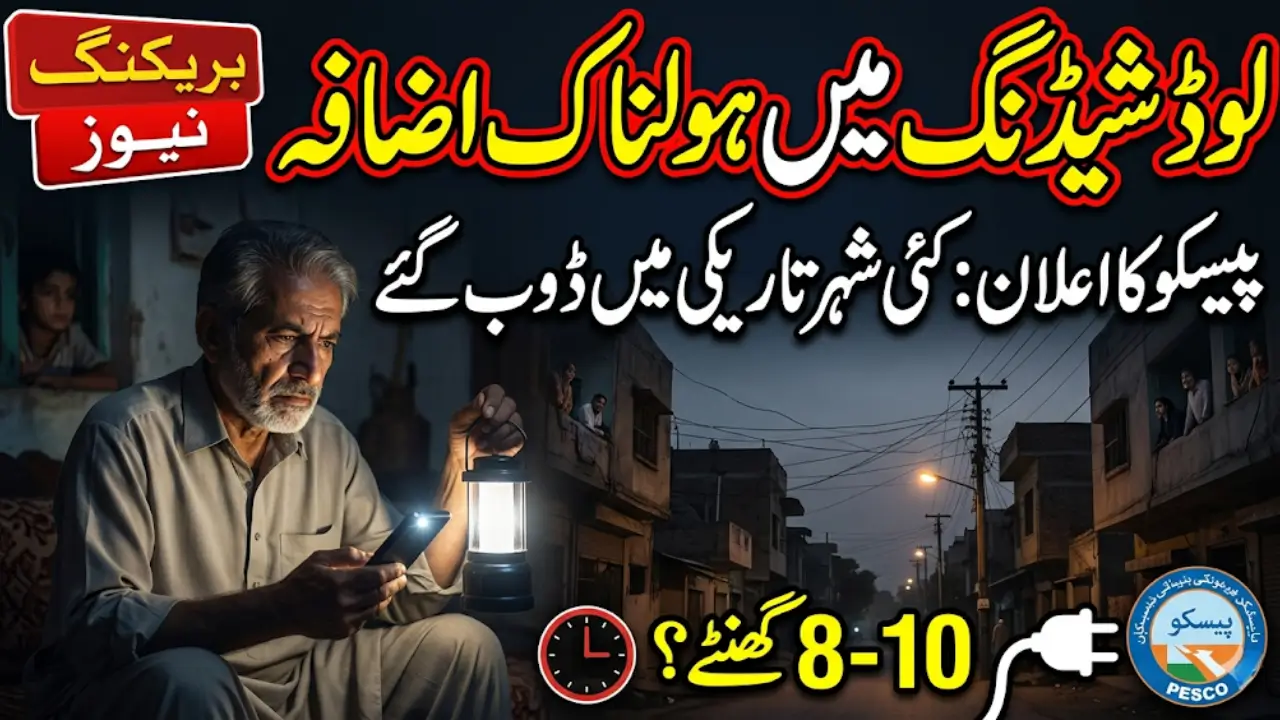
Electricity shortages have once again become a serious concern for residents across several cities as PESCO has increased load shedding hours. The decision has directly affected daily life, especially in areas already struggling with irregular power supply. Households, students, and businesses are now dealing with longer and more frequent power cuts, which has created frustration and disruption in routine activities.
The situation is particularly difficult during peak hours when demand for electricity is high. With rising temperatures and increased usage of cooling appliances, the pressure on the system has grown significantly. As a result, scheduled outages have been extended in many regions under PESCO’s control, making it harder for people to maintain normal productivity and comfort.
بجلی کی کمی ایک بار پھر کئی شہروں میں سنگین مسئلہ بن گئی ہے کیونکہ پیسکو نے لوڈ شیڈنگ کے اوقات میں اضافہ کر دیا ہے۔ اس فیصلے سے شہری اور دیہی دونوں علاقے متاثر ہوئے ہیں اور روزمرہ زندگی بری طرح متاثر ہو رہی ہے۔ گھروں میں معمول کے کام، طلبہ کی پڑھائی اور کاروباری سرگرمیاں سب بجلی کی بندش کی وجہ سے متاثر ہو رہی ہیں۔ خاص طور پر گرم موسم میں صورتحال مزید مشکل ہو جاتی ہے جب بجلی کی طلب بڑھ جاتی ہے اور نظام پر دباؤ زیادہ ہو جاتا ہے۔
Growing Pressure on the Electricity System
The electricity demand in Pakistan has been rising steadily over the past few years. Urban expansion, increased appliance usage, and industrial activity have all contributed to a higher load on the national grid. When supply cannot match this demand, load shedding becomes a necessary but difficult solution.
You Can Also Read : Private Schools Directed to Reserve Free Seats
In many areas, outdated infrastructure and limited generation capacity add further strain. This creates a situation where even small increases in demand can lead to extended outages. For ordinary consumers, this means longer hours without electricity, especially during peak consumption periods.
ماہرین کے مطابق بجلی کی طلب اور رسد کے درمیان بڑھتا ہوا فرق اس مسئلے کی بڑی وجہ ہے۔ پرانا نظام، ترسیلی نقصانات اور ایندھن کی کمی بھی بجلی کی فراہمی کو متاثر کر رہی ہے۔ اس کے ساتھ ساتھ حکومت اور متعلقہ ادارے صورتحال کو بہتر بنانے کے لیے مختلف اقدامات کر رہے ہیں، لیکن فوری طور پر مکمل بہتری ممکن نظر نہیں آتی۔ عوام کو بھی بجلی کے استعمال میں احتیاط کرنے کی ہدایت کی جا رہی ہے تاکہ لوڈ شیڈنگ کے اثرات کو کم کیا جا سکے۔
Cities Facing Longer Power Cuts
Several cities and surrounding towns under PESCO’s network are experiencing increased load shedding hours. Urban centers are seeing scheduled cuts during the morning and evening, while rural areas are facing even longer interruptions.
The most affected areas are dealing with frequent disruptions that impact both residential and commercial life. Daily routines are being adjusted around electricity availability, which has become unpredictable in many locations.
- Many urban neighborhoods are now facing 6 to 8 hours of daily load shedding
- Rural regions are experiencing even longer outages depending on feeder conditions
- Commercial markets are dealing with interrupted business hours and reduced customer activity
Key Reasons Behind Extended Load Shedding
There are several reasons behind the increase in load shedding hours. One major factor is the growing gap between electricity demand and supply. When consumption rises sharply, the system struggles to maintain balance.
Another important issue is transmission limitations. Electricity loss during distribution reduces the amount of power actually reaching consumers. In addition, fuel supply fluctuations and maintenance delays also affect generation capacity, forcing controlled outages to prevent system collapse.
You Can Also Read : Punjab Traffic Police Brings New Convenience for Bike Riders
Impact on Daily Life and Routine Activities
The extended power cuts are affecting people in many different ways. Household activities have become more difficult, especially for families relying on electric appliances for cooking, cooling, and water supply. Students are also struggling with studies due to interrupted access to lighting and internet services.
Small businesses are among the most affected groups. Many shops and service providers depend on continuous electricity for their operations. When power is cut, work slows down or stops completely, leading to financial losses.
- Daily household routines are frequently interrupted due to unpredictable outages
- Students face difficulties in online learning and exam preparation
- Small businesses experience reduced working hours and lower productivity
These challenges are increasing stress for both urban and rural communities.
Government and Local Response Efforts
Authorities are working to manage the situation through scheduled load management plans. These plans aim to distribute outages more evenly so that no single area bears the full burden. Efforts are also being made to monitor high-loss feeders and improve efficiency in electricity distribution.
At the same time, awareness campaigns are being encouraged to promote responsible electricity use. Consumers are being advised to reduce unnecessary consumption during peak hours to help ease pressure on the system.
How People Are Coping With Load Shedding
People in affected areas are finding different ways to manage the situation. Many households are adjusting their routines according to electricity schedules. Some are using backup systems such as UPS units and generators to maintain basic functions during outages.
Energy-saving habits are also becoming more common. People are trying to reduce electricity usage during peak times and rely more on natural light during the day. These small adjustments are helping families deal with frequent power cuts more effectively.
Looking Ahead at the Energy Situation
The increase in load shedding hours highlights the need for long-term improvements in the energy sector. Without expanding electricity production and upgrading infrastructure, such challenges are likely to continue. Growing demand requires stronger planning and more efficient resource management.
In the future, a more stable electricity system will depend on better generation capacity, reduced transmission losses, and smarter energy use. Until then, consumers may continue to face occasional disruptions, especially during high-demand seasons.
You Can Also Read : Internet and Electricity Problems Expected
Conclusion
The decision by PESCO to increase load shedding hours has created significant difficulties for residents in several cities. While it may be a temporary solution to manage supply issues, it clearly reflects deeper challenges in the energy system that need urgent attention and long-term planning.