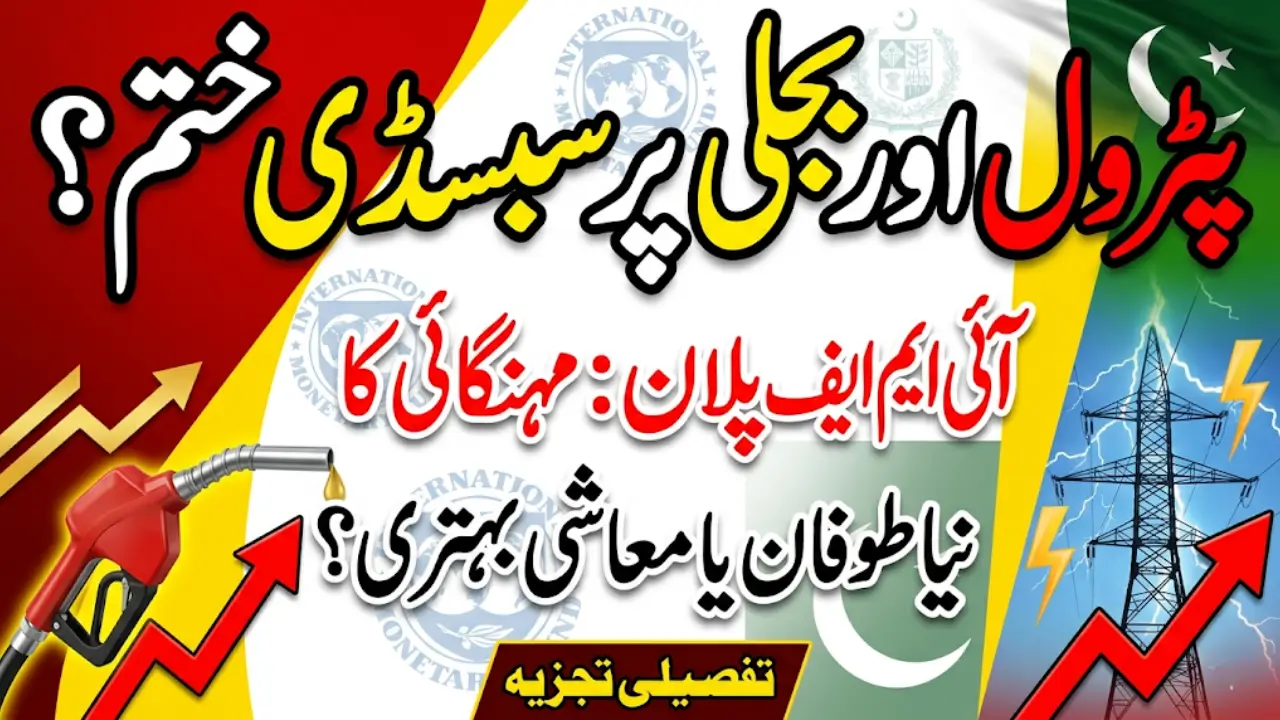
Pakistan May Remove Fuel & Electricity Subsidies under IMF plan. Learn impact on prices, inflation, and daily life with key economic changes explained.This move is aimed at stabilizing the national economy, reducing fiscal pressure, and improving energy sector efficiency. However, it may also have a direct impact on household budgets, transport costs, and inflation levels across the country.
What Does the IMF Plan Mean for Pakistan?
The IMF often recommends structural economic reforms to countries seeking financial support. In Pakistan’s case, energy subsidies on fuel and electricity are seen as a major burden on the national budget.The plan suggests gradually reducing or fully removing these subsidies so that energy prices reflect real market costs.
While this helps improve financial discipline, it also increases costs for consumers.The main goal is to reduce government debt and improve revenue collection, especially in the energy sector, which has long faced circular debt issues.
Why Fuel and Electricity Subsidies Are Under Review
Pakistan’s energy sector has been struggling with rising import bills and unpaid dues. Subsidies, while helpful for consumers, have created a heavy financial load on the government.
Key reasons behind the review include:
- Rising global oil and gas prices increasing import costs
- Circular debt in the electricity sector crossing unsustainable levels
- IMF conditions for financial assistance and loan stability
These challenges have forced policymakers to rethink subsidy policies and move toward a more market-based pricing system.
You Can Also Read : CM Punjab Green Tractor Scheme Phase 3
Possible Impact on Daily Life in Pakistan
If subsidies are reduced or removed, the effects will likely be felt in multiple areas of daily life. Fuel prices and electricity bills are directly linked to transportation costs and overall inflation.
Households may experience higher monthly expenses, especially in urban areas where electricity usage is higher. Transport fares and food prices could also increase due to rising fuel costs.
Here are some expected changes:
- Higher petrol and diesel prices leading to increased transport fares
- Increased electricity bills for households and businesses
- Overall rise in inflation affecting food and essential goods
While the adjustment may be gradual, the short-term pressure on low and middle-income families could be significant.
You Can Also Read : CM Punjab Laptop Scheme 2026
Government Strategy to Manage Public Impact
The government is expected to introduce relief measures alongside subsidy reforms. Instead of blanket subsidies, targeted support programs may be expanded to protect low-income groups.
Authorities may focus on:
- Direct cash support for poor households through social welfare programs
- Gradual price adjustments instead of sudden increases
- Promoting renewable energy to reduce dependency on imported fuel
This approach is intended to balance economic stability with social protection, ensuring that vulnerable groups are not fully exposed to price shocks.
Long-Term Economic Goals Behind the Reform
Although subsidy cuts may create short-term challenges, the long-term objective is to strengthen Pakistan’s economy. Removing distortions in energy pricing can improve efficiency and attract investment in the energy sector.
Over time, this could help reduce circular debt, improve power supply reliability, and stabilize government finances. A more sustainable energy pricing system is also expected to encourage energy conservation and better resource management.
Public Concerns and Economic Reality
Many citizens are concerned that removing subsidies will increase the cost of living. These concerns are valid, especially in a country already facing inflation and income pressure.
However, economists argue that subsidies are not always sustainable when government revenue is limited. Without reforms, the energy sector may continue to face financial stress, leading to more long-term instability.The challenge for policymakers is to ensure that reforms are balanced, gradual, and socially fair.